
Why Vacuum Drying Equipment is Essential for Modern Manufacturing
Vacuum drying equipment removes moisture from materials by creating a vacuum that lowers the boiling point of water, allowing gentle drying at much lower temperatures than conventional methods.
Key Types of Vacuum Drying Equipment:
- Rotary Vacuum Dryers – Cylindrical vessels with agitators for powders and granules
- Tubular Vacuum Dryers – High-efficiency continuous processing systems
- Vacuum Shelf Dryers – Batch systems with heated shelves for delicate materials
- Microwave Vacuum Dryers – Advanced systems combining microwave heating with vacuum
Primary Benefits:
- 70-80% energy savings compared to desiccant dryers
- 6x faster drying times than conventional methods
- Preserves heat-sensitive materials like pharmaceuticals and food products
- Prevents oxidation by removing oxygen during drying
When you reduce pressure in a drying chamber, water evaporates at temperatures as low as 133°F instead of the normal 212°F. This gentle process is crucial for manufacturers dealing with heat-sensitive materials that would degrade under traditional high-temperature drying.
The pharmaceutical, food processing, and specialty chemical industries rely on vacuum drying to maintain product quality while achieving faster processing times. Whether you’re drying active pharmaceutical ingredients, food powders, or hygroscopic materials, the right vacuum drying system can dramatically improve your process efficiency while protecting your valuable products.
The Science and Advantages of Vacuum Drying
The science behind vacuum drying equipment is simple yet powerful. By creating a vacuum, you lower the pressure inside a drying chamber. This dramatically affects how water behaves. While water normally boils at 212°F, under a vacuum of 25-27″ Hg, it boils at just 133°F. This allows moisture to escape without subjecting materials to damaging heat.
The process is straightforward: wet material is placed in a sealed, jacketed chamber. A vacuum pump removes the air, and the combination of gentle heat and low pressure causes moisture to evaporate quickly. This vapor is then pulled away and can be condensed for recovery. This efficient mass transfer operation is far gentler than conventional convective drying, which can create crusty surfaces and expose products to damaging oxygen.
For those interested in diving deeper, there’s extensive scientific research on vacuum drying that explores these principles in detail.
Why It’s a Superior Method
Vacuum drying equipment is superior for several reasons, delivering results traditional methods can’t match.
- Speed: Drying cycles can be completed in one-sixth the time of desiccant dryers. Heating cycles often run just 20 to 30 minutes before the vacuum takes over, turning processes that took hours or days into a fraction of that time.
- Energy Savings: They consume 70-80% less energy compared to desiccant systems, reducing operational costs and environmental impact.
- Quality Preservation: Lower drying temperatures keep heat-sensitive materials intact. Pharmaceuticals maintain potency, food products retain nutrients and color, and specialty chemicals keep their desired properties.
- Oxidation Prevention: Removing oxygen protects sensitive compounds from degradation, leading to better-looking, longer-lasting products.
- Solvent Recovery: Evaporated solvents can be efficiently condensed and reused, making the process more sustainable and cost-effective.
If you’re trying to figure out which drying method works best for your specific needs, our guide on choosing the right dryer can help you steer the options.
Materials Best Suited for Vacuum Drying
Vacuum drying equipment shines when working with materials that need a gentle touch. Key applications include:
- Pharmaceuticals: Ideal for heat-sensitive Active Pharmaceutical Ingredients (APIs) and excipients, as it preserves their medicinal properties.
- Food Products: Gently dries delicate items like fruit slices, vegetable powders, and herbal extracts, maintaining their nutritional value, color, and aroma.
- Plastics and Polymers: Effectively removes moisture from hygroscopic materials, preventing issues like brittleness or poor surface finish.
- Chemicals: Offers safety advantages for toxic or explosive materials due to the reduced temperature and controlled environment, while also allowing for efficient solvent recovery.
- Heat-Sensitive Powders and Granules: The gentle environment protects critical properties like texture, solubility, and chemical structure.
- Hygroscopic Substances: Provides precise control over final moisture content for materials that readily absorb moisture from the air.
The technology’s versatility extends to applications like wood processing and drying metals to prevent corrosion, with new uses continually emerging.
Types of Vacuum Drying Equipment and Their Applications
When it comes to vacuum drying equipment, one size doesn’t fit all. The right dryer must be selected for the specific material and production scale. Modern systems offer flexibility with batch operation for smaller, varied quantities and continuous operation for high-volume production. Each industry has unique challenges: pharmaceuticals require precision and contamination control; food processing needs gentle handling to preserve quality; and plastics manufacturing demands consistent moisture removal. Specialized vacuum dryers are designed to meet these specific needs.
Rotary and Tumble Dryers
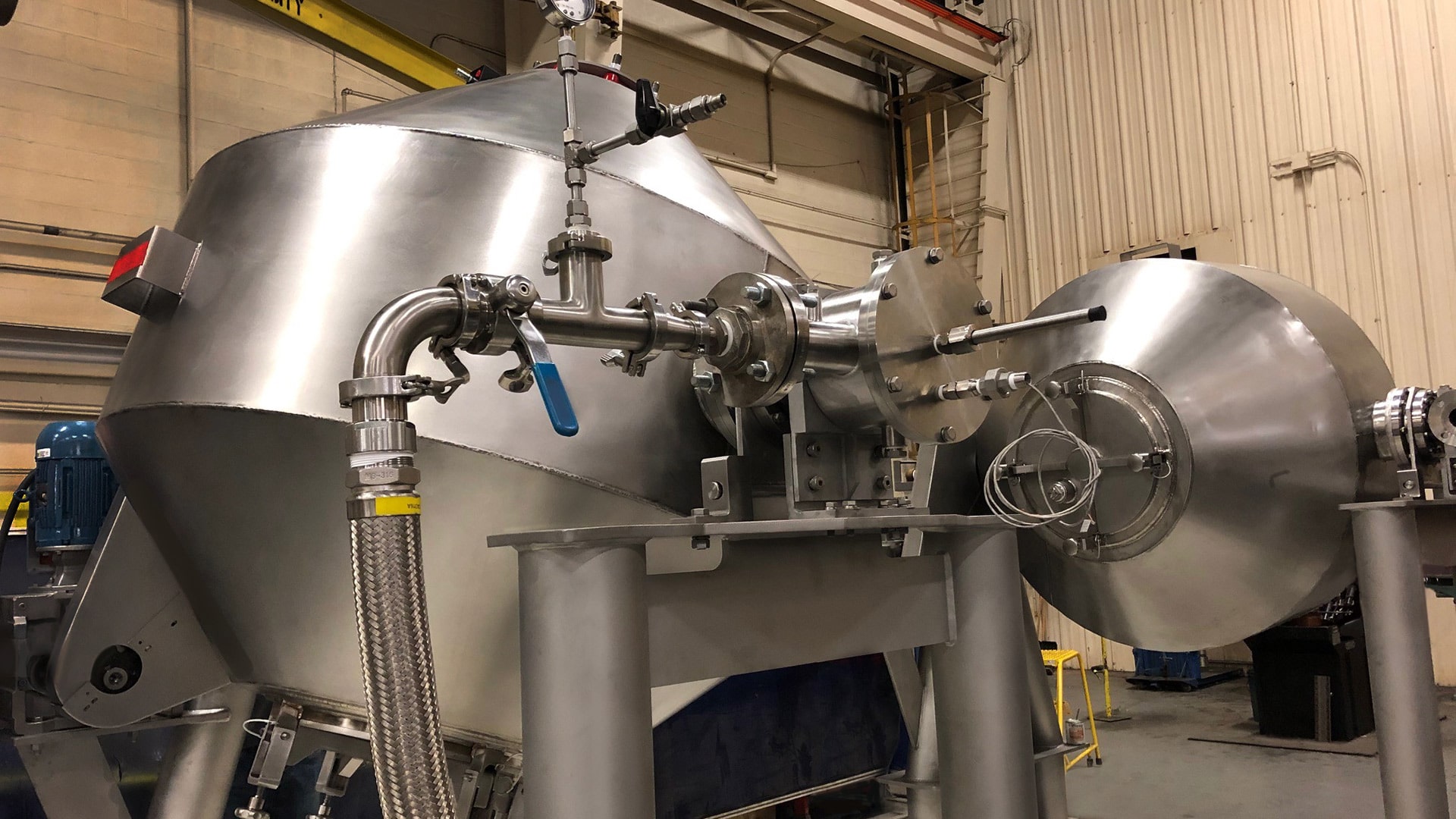
These dryers feature a heated, jacketed cylindrical vessel with a central agitator. The system provides a gentle tumbling action, ensuring all particles contact the heated surface for uniform heating. This prevents hot spots and ensures consistent drying throughout the batch.
Their gentle tumbling action is ideal for delicate powders or granules. The hermetically sealed design prevents material loss and contamination, which is crucial for hygienic or high-value applications. These systems also offer excellent solvent recovery, as a condenser and receiver can efficiently capture and reuse solvents, improving sustainability and cost-effectiveness.
Our Solids Processor exemplifies this technology, offering robust performance across diverse materials while maintaining the gentle handling your products deserve.
Tubular Vacuum Dryers
For high thermal efficiency and continuous processing, tubular vacuum dryers are an excellent choice. They use indirect heating as materials flow through a heated tube under vacuum, acting as a drying conveyor. Their continuous processing capability is ideal for high-volume operations with free-flowing solids, preventing bottlenecks. By maximizing heat transfer under vacuum, they achieve excellent drying performance with minimal energy waste.
We offer both Tubular Vacuum Dryers and Continuous Tubular Vacuum Dryers to meet various industrial demands.
Other Types of Vacuum Drying Equipment
- Vacuum shelf dryers are batch systems where material on trays is placed on heated shelves. They are perfect for delicate products, pastes, or materials that cannot be tumbled.
- Cone screw dryers combine mixing and drying. A rotating screw lifts and mixes the product under vacuum, making them suitable for powders, granules, and viscous materials.
- Paddle dryers use heated paddles for intensive mixing and heat transfer. They are effective for sticky, pasty, or sludge-like materials that are difficult to process in other dryers.
- Freeze dryers (lyophilization systems) are a premium option that removes moisture via sublimation (ice to vapor). This process achieves the highest product quality for the most sensitive pharmaceuticals, biologics, and foods. While capital and operational costs are higher, they are essential for certain applications.
Each dryer type has unique strengths. Selecting the optimal solution depends on your material properties, throughput, and quality requirements.
Selecting the Right System: Components and Considerations
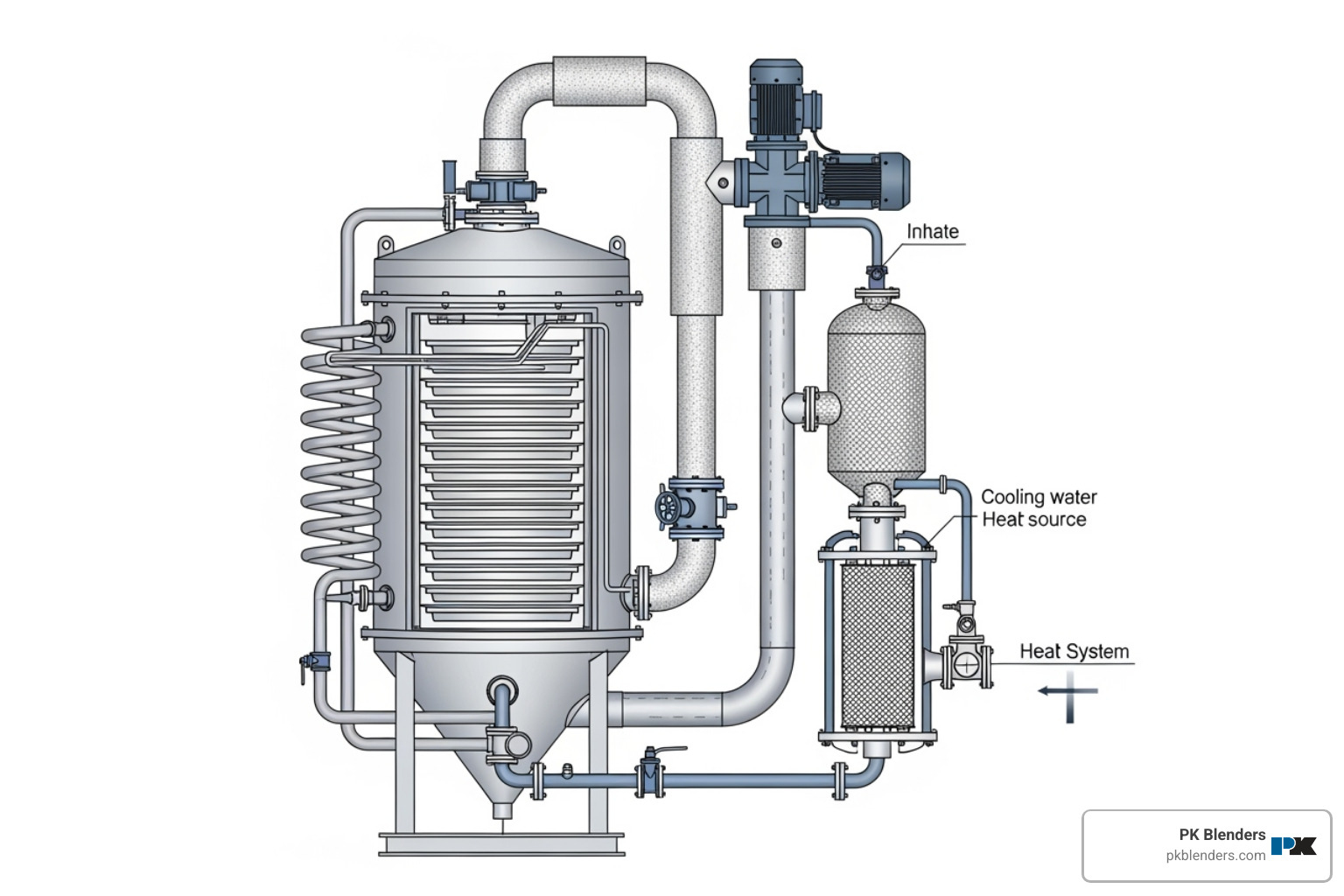
Choosing the right vacuum drying equipment is a critical investment. The complete system must integrate seamlessly with your materials, production goals, and workflow. In modern systems, each component—from the vacuum pump to the controls—works in harmony to create the precise drying conditions required.
Key Components of a Vacuum Dryer
- Drying Chamber: A precision-engineered, air-tight vessel, typically made from hygienic and corrosion-resistant AISI 316L stainless steel.
- Heating System: Uses gentle, indirect heating via jacketed walls. A circulating heat transfer medium (water or oil) maintains precise temperatures (20°C to 300°C).
- Vacuum Pump: Creates the essential low-pressure environment. The right choice depends on the application; options include dry screw, liquid ring, and oil-lubricated rotary vane pumps.
- Condenser: Sits between the chamber and pump to cool and capture evaporated solvents, protecting the pump and allowing for material recovery.
- Dust Filter: Protects the vacuum pump from solid particles carried over during drying, ensuring reliable operation.
- Agitator or Tumbling Mechanism: Ensures uniform drying through gentle tumbling or intensive mixing.
- Control System: Modern controllers precisely monitor temperature, pressure, and timing to ensure consistent, repeatable processing.
Key Factors for Purchasing Vacuum Drying Equipment
- Capacity and Throughput: Determine if you need a small batch unit or a large-scale continuous system to match production needs.
- Temperature Range: The system must accommodate the required temperature for efficient drying without causing product degradation.
- Achievable Vacuum Level: The required vacuum level depends on your solvents and target final moisture content.
- Material of Construction: Stainless steel is often required for pharmaceutical and food applications to ensure product safety and meet regulatory standards.
- Ease of Cleaning: Clean-in-Place (CIP) and Sterilize-in-Place (SIP) systems automate cleaning, saving time and ensuring hygiene, which is crucial for multi-product facilities.
- Safety Features: When handling flammable solvents, look for ATEX compliance, pressure relief systems, and nitrogen inerting capabilities.
- Vendor Support: An experienced manufacturer with comprehensive support and maintenance programs is a valuable long-term partner.
Before making a final decision, conduct Lab Testing with your materials to validate process parameters and ensure the equipment will deliver the expected results.
Innovations in Drying: Microwave-Assisted Technology
One of the most significant advances in vacuum drying equipment is the integration of microwave technology. Microwave vacuum drying combines the gentle, oxygen-free environment of a vacuum with the rapid heating power of microwaves. Instead of heating from the outside-in via jacketed walls, microwaves generate heat directly within the material itself.
This process, known as volumetric heating, occurs as microwaves penetrate the product and excite water molecules. Microwaves selectively target water and solvents over the product itself, leading to fast and efficient evaporation even at very low temperatures. Unlike traditional methods where heat slowly penetrates the material, microwave technology targets moisture directly. For a deeper dive, see this research on microwave-assisted vacuum drying of leaves.
Benefits of Microwave Vacuum Drying
Combining microwave energy with a vacuum creates a drying method that is both extremely fast and exceptionally gentle.
- Drastically Reduced Drying Times: This is a primary benefit, cutting processes from days to hours. This efficiency is why the U.S. Army uses it for field rations.
- Lower Processing Temperatures: Because heat is generated internally, excellent results are achievable at very low temperatures, offering even gentler treatment for heat-sensitive materials.
- Improved Product Quality: This method leads to better nutrient retention, more vibrant colors, and richer flavors. It can even prevent browning in fruits like avocados and bananas, a common challenge with other drying methods. A study on fruit and vegetable quality shows how impressive these improvements can be.
- Uniform Drying: Since heat is generated evenly throughout the material, it eliminates the hot spots and under-dried areas common in other methods.
This innovative approach is particularly valuable in food processing and pharmaceuticals, where rapid drying is needed without compromising delicate product properties.
Frequently Asked Questions about Vacuum Drying
Over the years, we’ve had countless conversations with manufacturers about vacuum drying equipment. These three questions come up time and time again.
How does vacuum drying benefit the pharmaceutical industry?
The pharmaceutical industry relies on vacuum drying to protect product integrity. Key benefits include:
- Preserving Heat-Sensitive Ingredients: Low-temperature drying prevents thermal degradation of Active Pharmaceutical Ingredients (APIs) and excipients, preserving their medicinal potency.
- Contamination Control and Safety: The closed-system design is ideal for handling potent or toxic materials, preventing operator exposure and environmental contamination while maintaining sterile conditions.
- Efficient Solvent Recovery: Valuable solvents are captured and recovered for reuse, reducing costs and improving environmental responsibility.
- Precise Moisture Control: Manufacturers can achieve the exact final moisture content needed for product stability and shelf life.
What are the main safety considerations when operating vacuum dryers?
Operating vacuum drying equipment safely requires understanding several key risks:
- Implosion Risk: The vacuum creates immense external pressure on the chamber walls. Proper design, quality construction, and regular inspection are essential to mitigate this risk.
- Handling Flammable Solvents: Vacuum conditions can lower a solvent’s flashpoint. While this allows for safer drying at lower temperatures, ATEX-rated equipment is often required to prevent ignition sources.
- Operator Protection: While the sealed design contains materials, proper procedures for loading, unloading, and cleaning, along with personal protective equipment, are essential.
- Nitrogen Inerting: Breaking the vacuum with an inert gas like nitrogen adds a layer of safety when handling oxygen-sensitive or flammable materials.
How much faster is vacuum drying?
The significant speed increase is a primary reason manufacturers switch to vacuum drying equipment. It can be up to six times faster than desiccant dryers, reducing processes that take days to mere hours. The initial heating cycle often lasts only 20 to 30 minutes before the vacuum is applied.
This efficiency stems from lowering water’s evaporation point under vacuum. Less time in the dryer means higher throughput and faster operational turnaround. While the exact speed improvement varies by material and equipment, the time savings are consistent across industries and can significantly boost productivity.
Conclusion
Vacuum drying equipment is a game-changer for modern manufacturing, offering a unique combination of gentle efficiency for applications ranging from pharmaceuticals and food to plastics and specialty chemicals. By reducing pressure, vacuum drying lowers water’s boiling point for rapid evaporation at safe temperatures. It is 70-80% more energy efficient, up to six times faster than desiccant dryers, and preserves product quality far better than hot air drying.
Selecting the right system is crucial. Every material and process is unique. At Patterson Kelley, our decades of experience allow us to partner with you to understand your challenges and optimize your drying process. Our comprehensive testing lab allows us to work with your materials to determine optimal process parameters before you invest. This hands-on approach, combined with our commitment to industry compliance and hygienic design, is what sets us apart.
Ready to transform your drying operations? We’d love to hear about your specific challenges and show you how the right vacuum drying equipment can make a real difference in your process. Contact Us to start the conversation, Request a Quote for your specific application, or Explore our full range of Dryers to see all the innovative solutions we offer.
Your materials deserve better than harsh, energy-intensive drying. Let’s work together to give them the gentle, efficient treatment they need to maintain their quality while boosting your productivity.