
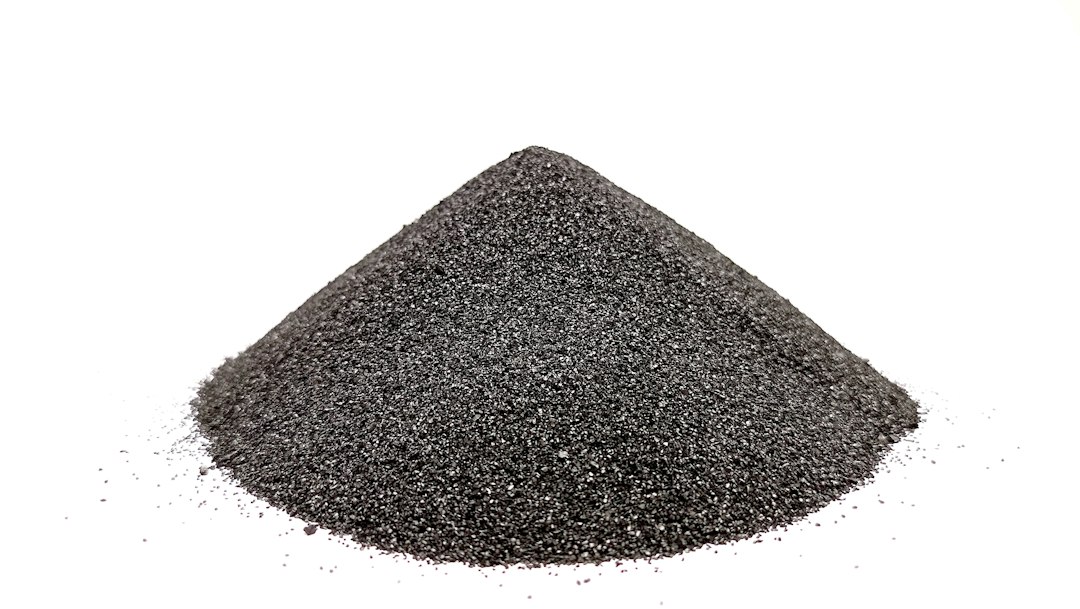
Why Blending Powder Metallurgy Is the Foundation of Quality Parts
Blending powder metallurgy is the critical first step where raw metal powders, alloying elements, and processing aids are thoroughly mixed to create a homogeneous feedstock for compaction and sintering. Without proper blending, your final parts will suffer from inconsistent properties, weak spots, and dimensional variations.
Quick Answer: What is Powder Metallurgy Blending?
- Purpose: Mix base metal powders with alloying elements and lubricants to achieve uniform composition
- Key Goal: Create a homogeneous blend that ensures consistent part properties after compaction and sintering
- Typical Time: About 1 hour for a 1,000 kg batch
- Common Equipment: V-Blenders, Double Cone Blenders, and other tumbler-style mixers
- Critical Additives: Lubricants (zinc stearate, stearic acid), binders, and alloying elements
- Impact: Directly affects final part strength, density, wear resistance, and dimensional accuracy
Unlike traditional metalworking, powder metallurgy builds parts from the ground up, and the blending stage is where your part’s future properties are locked in. If iron powder isn’t uniformly mixed with chromium, or if lubricant isn’t evenly distributed, you’ll face failures. Even small variations in the blend cause big problems downstream, such as die seizure, cracking, or failed quality inspections—defects that are unacceptable in industries like automotive and aerospace.
This guide explains how blending works in powder metallurgy, what equipment delivers the best results, and how to verify your blend quality before moving to compaction.
The “Why”: Core Purposes of Powder Metallurgy Blending
In blending powder metallurgy, every ingredient must be precisely measured and thoroughly mixed. The uniformity of your blend directly determines whether your final parts will perform flawlessly or fail. According to ASM International, blending intermingles powders of the same nominal composition, while premixing combines chemically dissimilar materials (e.g., iron, chromium, and lubricants). Both are essential for success.
The properties of your raw powders and finished parts are incredibly sensitive to variations in particle size and concentration. A blend that’s off by a small percentage can cause issues with powder flow, density, and dimensional stability, ultimately affecting the mechanical strength of your product. In powder metallurgy, mixing excellence isn’t optional; it’s the foundation.
PK Blenders has been helping manufacturers in the metal powders industry create consistent, high-quality blends for decades. Learn more about our services for the metal powders industry.
Achieving Uniform Chemical Composition
The primary purpose of blending powder metallurgy is creating a uniform chemical composition. Every scoop of powder must have the same ratio of elements. This is often done by blending elemental powders, like iron, copper, nickel, or chromium, in precise ratios to create a specific alloy. While pre-alloyed powders exist, elemental mixes remain popular.
- Iron powders are cost-effective and strong, forming the backbone of many automotive parts.
- Copper powders offer excellent conductivity for electrical applications.
- Aluminum powders provide lightweight strength and corrosion resistance for aerospace.
By blending these base metals with elements like nickel, chromium, or molybdenum, you can engineer custom alloys with specific mechanical properties. A key advantage of elemental mixes is their excellent compressibility. The soft base powder particles compact efficiently, speeding up production and reducing tool wear compared to harder, pre-alloyed powders.
Incorporating Essential Additives
Blending also incorporates essential additives that make the P/M process possible. These temporary helpers burn off during sintering but are critical for production.
Powdered lubricants, such as zinc stearate or stearic acid, are added at 0.5-1.5% by weight. They reduce friction between the powder and die walls during compaction, making it easier to eject the part and preventing common defects like cracking. Zinc stearate is particularly effective for iron-based parts.
Compaction binders, like wax-based binders or Polyvinyl alcohol (PVA), improve the “green strength” of the part before it enters the sintering furnace. Without adequate green strength, parts would crumble during handling. Binders hold the powder particles together long enough to get them safely to the next stage.
Uniform distribution of these additives is just as important as the alloy composition. Too little lubricant can cause parts to stick in the die, while too much binder can interfere with compaction. This is where proper blending equipment and technique are essential.
The “How”: A Step-by-Step Guide to the Blending Process
The journey from raw powder to a precision component starts with blending. This foundational step prepares powders for the demanding stages of compaction and sintering. Without a precisely executed blending powder metallurgy process, even the best equipment can’t prevent part inconsistency.

Step 1: Material Selection and Characterization
First, select the right materials for your application. This includes base metal powders (iron, copper, aluminum), alloying elements (nickel, chromium), and processing aids like lubricants and binders. We don’t just select materials; we characterize them. Particle size and shape dramatically influence how a powder behaves. Spherical particles flow well but can segregate, while irregular particles resist segregation but require more attention during blending. This understanding ensures predictable results.
Step 2: Precise Weighing and Proportioning
In blending powder metallurgy, precision is everything. Each component is weighed using high-precision scales to ensure accuracy. Every weight percentage is documented to support quality control and batch consistency. This meticulous approach also helps troubleshoot any downstream issues and ensures the final blend matches your specifications exactly.
Step 3: The Blending Powder Metallurgy Mixing Stage
This is where individual ingredients become a homogeneous mixture. Materials are loaded into the blender in a sequence that promotes mixing. We then set the blending time and rotational speed based on powder characteristics and batch size. A typical mixing time for a 1,000 kg batch is about one hour in a tumbler-style blender, though some V-blenders can achieve homogeneity in 10 to 18 minutes. The goal is perfect randomness, where every sample has an identical composition. After blending, the mix is carefully unloaded and should be used within a week to prevent demixing.
Step 4: Integration with Compaction and Sintering
Your blended powder is now feedstock for dye pressing. During compaction, immense pressure (150 to 700 MPa) transforms the loose powder into a shaped green compact. The blend’s quality affects how well the powder flows into the die and its compressibility. The lubricants you added reduce friction and prevent die seizure. The green compact then enters the sintering furnace, where heat fuses the particles together via diffusion bonding, creating a solid structure with controlled porosity reduction. A perfectly executed blend flows smoothly, compacts uniformly, and sinters into a part that meets every specification.
The “What”: Equipment and Techniques for Blending Powder Metallurgy
Selecting the right blending equipment is critical for blending powder metallurgy. The machinery must achieve perfect homogeneity without damaging fine metal particles or altering their characteristics. The choice depends on batch size, material properties, and production efficiency.
Tumbler Blenders: The Industry Standard
Tumbler blenders are the industry standard for powder metallurgy because their gentle tumbling action minimizes shear forces. This is crucial for maintaining particle size and shape, which ensures the compressibility and final properties of your parts are not compromised.
Twin Shell Dry Blenders (or V-blenders) and Double Cone Blenders are two popular tumbler designs we manufacture for demanding powder processing. They operate with a low-impact motion, making them highly effective for free-flowing powders. The gentle rotation creates a natural cascading action that achieves homogeneity without the risk of segregation. A key advantage is their reliability; they deliver consistent blends batch after batch, which is exactly what quality powder metallurgy demands.
We invite you to explore our full range of industrial blenders at PK Blenders to see how our equipment can transform your blending operations.
Other Blending Technologies
While other blending technologies with high-shear action exist, they are often unsuitable for powder metallurgy materials. Their aggressive action can damage delicate metal particles, altering their shape and compromising compressibility. For this reason, the gentle, low-impact action of tumbler blenders is the preferred method, preserving particle integrity while achieving the thorough homogeneity required for successful compaction and sintering.
Advanced Processing Capabilities
Modern blending systems offer more than just basic mixing. Our industrial blenders can be equipped with intensifier bars to break up agglomerates or facilitate liquid dispersion for adding binders. This ensures even the most challenging materials achieve complete homogeneity.
For applications where moisture control is critical, integrated vacuum drying is a game-changer. Our systems can simultaneously blend and dry by recirculating hot fluid through the blender’s jacket under vacuum, achieving moisture levels below 0.10%. This prevents oxidation and ensures predictable performance. Blending and drying in a single unit streamlines your process and contributes to higher purity.
To learn more about how our advanced powder dryers can complement your blending operations, visit Dryers. If you have specific requirements for your powder metallurgy operation, we encourage you to Request a Quote custom to your unique needs.
Quality, Challenges, and Safety in Powder Blending
Once blending is complete, the powder must be rigorously assessed. The quality of the blend dictates the success of the entire P/M process, so we employ strict quality control, troubleshoot common issues, and adhere to safety protocols to ensure product integrity and worker well-being.
Assessing the Quality of Your Blended Powder
How do we know a blend is right? By testing it. We use several key quality control measures to verify the powder meets specifications before compaction.
- Flow rate is measured with a Hall Flowmeter (DIN EN ISO 4490) to ensure the powder will fill the die efficiently and consistently.
- Bulk and tap density (ASTM B212, DIN EN ISO 3923-1, DIN EN ISO 3953) measurements tell us about the powder’s packing characteristics, ensuring stable die fills. You can learn more about bulk density.
- Particle size analysis (sieving, laser diffraction) verifies that the particle size distribution is uniform, which is critical for predictable compaction.
- Chemical composition analysis (XRF, ICP-OES) confirms that alloying elements are homogeneously distributed, often requiring less than ±0.3% variation for critical applications.
| Quality Parameter | Test Method | Desired Outcome |
|---|---|---|
| Flow Rate | Hall Flowmeter (DIN EN ISO 4490) | Consistent and optimal flow for efficient die filling. A higher flow rate indicates easier handling. |
| Bulk Density | ASTM B212, DIN EN ISO 3923-1 | Stable mass per unit volume to ensure consistent die fills. |
| Tap Density | DIN EN ISO 3953 | Indicates how densely the powder can be packed after vibration. |
| Particle Size | Sieving, Laser Diffraction, Dynamic Image Analysis | Uniform particle size distribution for consistent properties. |
| Chemical Comp. | XRF, ICP-OES | Less than ±0.3% variation across samples for critical elements. |
We invite you to perform material analysis in our Lab Testing facility to optimize your blend formulations.
Common Challenges in the blending powder metallurgy process
Understanding common pitfalls in blending powder metallurgy helps prevent them.
- Segregation (demixing): Particles separate due to differences in size, density, or shape, leading to inconsistent part properties. Factors affecting blending like particle size distribution are critical.
- Agglomeration (clumping): Fine powders stick together due to humidity or static, preventing a homogeneous mix.
- Over-blending: Excessive mixing can cause work hardening, smear lubricants, and even lead to re-segregation. For iron powders in V-blenders, optimal blending is often achieved in 12-18 minutes.
- Dusting: Fine particles become airborne, leading to material loss and worker exposure risks. Proper dust collection is essential.
- Static electricity: Buildup can cause particles to cling to equipment, interfering with mixing and creating potential ignition sources.
- Contamination: Foreign particles compromise product integrity, highlighting the need for dedicated equipment and rigorous cleaning.
- Oxidation: Reactive powders like aluminum can oxidize when exposed to air, altering their properties. This is often addressed by blending in an inert atmosphere.
Safety and Environmental Protocols
Working with fine metal powders requires strict safety awareness. The high surface area of these powders can pose a dust explosion risk and health hazards from inhalation or skin contact. You can learn more about these concerns in “Health Hazards and Powder Metallurgy” from Occupational Medicine.
We emphasize comprehensive safety protocols:
- Personal Protective Equipment (PPE): Workers must wear appropriate respirators, gloves, and safety glasses.
- Ventilation and Dust Collection: Dedicated, well-ventilated spaces with air purification and properly grounded dust removal systems are critical to protect workers and prevent explosions.
- Explosion Prevention: For combustible powders, measures like equipotential bonding to prevent static buildup and blending in inert gas atmospheres (nitrogen purging) are used.
On an environmental note, the powder metallurgy process is inherently efficient. It often uses 30-60% less energy and achieves over 95% material utilization compared to traditional machining. Our blending equipment is designed for energy efficiency, helping you lower operational costs and reduce your environmental impact.
Frequently Asked Questions about Powder Metallurgy Blending
Here are answers to common questions about blending powder metallurgy.
Can powders be mixed during the sintering stage?
No. Blending is a preparatory step that must happen before compaction and sintering. Think of it like baking, you can’t mix ingredients after the cake is in the oven. The final properties of your part are locked in by the quality of the initial blend. No amount of heat in the sintering furnace can fix an inconsistent mixture.
How long does it take to blend metal powders?
It depends on batch size, blender type, and powder characteristics. As a guideline, a 1,000 kg batch of metal powder can often be homogenized in about one hour using an efficient tumbler blender. For some iron-based powders in a V-blender, optimal blending can be achieved in 12 to 18 minutes. The key is to achieve homogeneity without over-blending, which can degrade quality.
What is the difference between blending and premixing?
Though often used interchangeably, the terms have a technical distinction. Blending typically refers to mixing powders of the same base composition to ensure uniformity (e.g., combining several lots of iron powder). Premixing involves combining chemically or physically dissimilar materials, such as a base metal, alloying elements, and lubricants, to create a new formulation. In practice, the goal for both is the same: a perfectly uniform mixture that delivers consistent, high-quality parts.
Conclusion: Perfecting Your Powder for Superior Parts
The journey through blending powder metallurgy shows that this initial step is where the quality of your final metal part is determined. From achieving precise chemical composition to ensuring uniform additive distribution, the undeniable truth is that homogeneity is everything. Without a perfectly prepared blend, the subsequent compaction and sintering processes become a gamble, leading to inconsistent properties and costly defects.
Blending is the foundation. A properly mixed powder ensures that every part has the same density, strength, and performance. It’s the difference between reliable, in-spec components and scrapped batches.
At Patterson Kelley, we have spent decades perfecting the science of powder blending. Our experience designing and manufacturing precise blending systems means we understand the challenges of working with intricate iron-based alloys, copper formulations, and other specialized metal powders. We provide the foundation for your manufacturing success.
We proudly serve diverse Industries across the United States, Canada, and internationally from our facilities in Tonawanda, NY, and Louisville, KY. With our comprehensive testing lab and industry compliance expertise, we are ready to help you optimize your material preparation.
If you’re ready to optimize your Blending Powder Processing and achieve consistent, high-quality results, we’re here to help. Your superior parts start with perfecting your powder, and that’s where we excel.